The Morning the Water Would Not Move
Senior 1 · Term 1 · Finding Information
The Morning the Water Would Not Move
A confident message says the clean-up has been cancelled. The official notice says otherwise, and one unsafe decision could make the problem worse.
Two Messages, One Blocked Drain
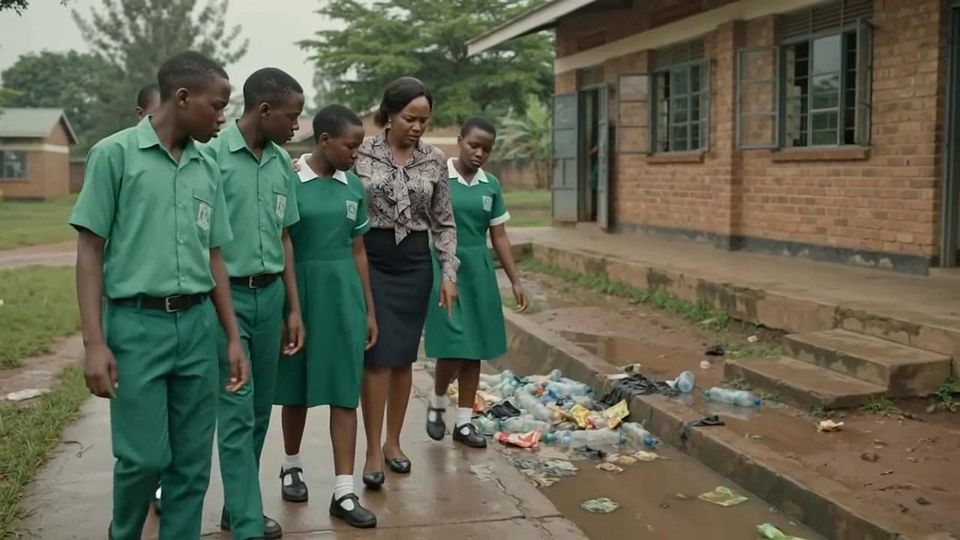
Rain had fallen heavily during the night. By Wednesday morning, dirty water had collected beside the classroom blocks and across part of the main footpath.
Plastic bottles, food wrappers and other rubbish were packed inside the school’s drainage channels. The water had nowhere to go.
Akello stopped at the edge of the flooded path. Joel stood beside her, reading a message on his phone.
Joel: “The clean-up has been cancelled. The drains are too badly blocked, and students cannot do anything.”
He sounded certain. Several learners turned away. Another learner removed her shoes and stepped towards the deepest drain.
Akello: “Stop. We do not know what is inside that water.”
She pointed towards the noticeboard. An official notice had been displayed there since assembly, but nobody in the group had read it.
Official notice
School Drainage Clean-up
Wednesday, 14 August · 3:30 p.m. · Meet beside the library veranda
Environment Club members, class representatives and other registered volunteers may help collect visible litter from safe, shallow areas under teacher supervision. Protective gloves, rubbish bags and simple cleaning tools will be provided.
Students must not:
- enter deep drains;
- touch broken glass, medical waste or unidentified objects;
- remove heavy drain covers; or
- work without adult supervision.
If water still does not flow after visible rubbish has been removed, students must stop and report the blockage to the supervising teacher. The school administration will arrange further inspection.
— Deputy Head Teacher
Akello Must Respond
Akello compared the notice with Joel’s message. The activity had not been cancelled. Students could help, but only in clearly stated ways and under supervision.
More learners were arriving. Some had already received Joel’s message. Others were discussing whether to climb over the flooded path or begin clearing the drain immediately.
Akello had only a few minutes before the first lesson began. She needed to correct the false information without embarrassing Joel, prevent unsafe action and make sure the drainage problem did not return after one clean-up.
“We need one message that people can trust,” she said.
Think it through
What should Akello tell the school community now, and how should she use the official notice to correct the rumour, protect learners and help prevent the drainage problem from returning?
Use accurate details from both messages. Explain what learners should do, what they must not do and why checking the source matters.
Your response
Write the message or recommendation Akello should give, and explain your reasoning.
Feedback on your response
Member discussion